


Why Active Play Supports Healthy Development
Active play does far more than help children burn off extra energy. It supports physical strength, emotional regulation, social confidence, and everyday problem-solving in ways that screen-based entertainment simply cannot match. When children run, climb, throw, push, pedal, and balance, they are training their muscles and cardiovascular system while also learning how their bodies move through space.
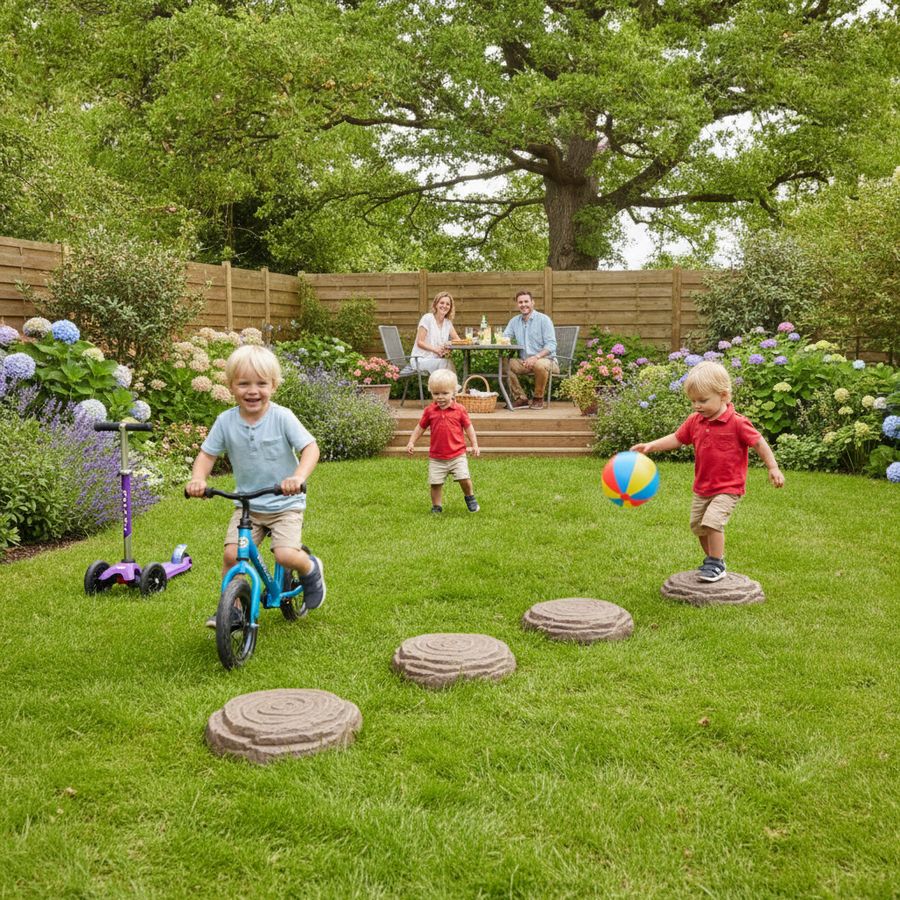
Outdoor toys are especially helpful because they invite bigger movements and open-ended exploration. A ball can become a passing game, a target challenge, or a race. A ride-on or scooter can help children build leg strength and directional awareness. Even simple garden toys for kids, such as stepping stones or hoops, encourage repetition, practice, and improvement without making exercise feel like a task.
Active play helps children build strong bodies, sharper coordination, and more confidence through movement that feels fun instead of forced
There is also a strong developmental benefit in free movement outdoors. Children often practice important life skills while playing, including:
- Taking turns and sharing space
- Managing excitement and frustration
- Testing limits safely
- Improving concentration through movement challenges
- Building resilience by trying again after mistakes
For families looking for meaningful ways to support healthy development, choosing outdoor toys that encourage regular movement is a smart step. The best active play experiences blend fun with skill-building, helping children stay engaged while developing balance, coordination, and confidence every day.
Best Outdoor Toys for Different Ages
The best outdoor toys depend on a child’s age, stage, and confidence level. Younger children benefit most from toys that are simple, stable, and easy to understand, while older children usually enjoy more challenge, speed, and skill-based play. Choosing age-appropriate options keeps active play enjoyable and reduces frustration.
For toddlers, push toys, bubble mowers, soft balls, ride-ons with wide wheels, and beginner garden toys for kids are excellent choices. These support early walking, chasing, and simple coordination activities. Preschoolers often enjoy trikes, balance bikes, mini slides, beanbag toss sets, and stepping stones because these toys combine movement with imagination and repetition.
As children grow, they are often ready for outdoor toys that demand more control and planning. School-age children usually thrive with scooters, jump ropes, obstacle-course kits, target games, and sports sets. These options help refine timing, reaction speed, and body awareness while still feeling playful.
- Ages 1-3: push toys, water tables, soft balls, beginner ride-ons
- Ages 3-5: trikes, balance bikes, tunnels, stepping stones
- Ages 5-8: scooters, skipping ropes, throwing games, garden obstacle sets
- Ages 8+: more advanced sports gear, larger climbing challenges, coordination games
The right toy meets a child where they are now while leaving just enough room to grow
When in doubt, look for toys that can be used in more than one way. Versatile outdoor toys often stay interesting longer and continue supporting skill development as children become more capable and adventurous.
Games That Improve Balance and Coordination
If your goal is to build real physical skills, few activities are as effective as games centered on balance toys and movement challenges. Balance and coordination develop through repeated practice, especially when children shift weight, change direction, and react quickly. The best part is that these abilities can be improved through play that feels exciting rather than instructional.
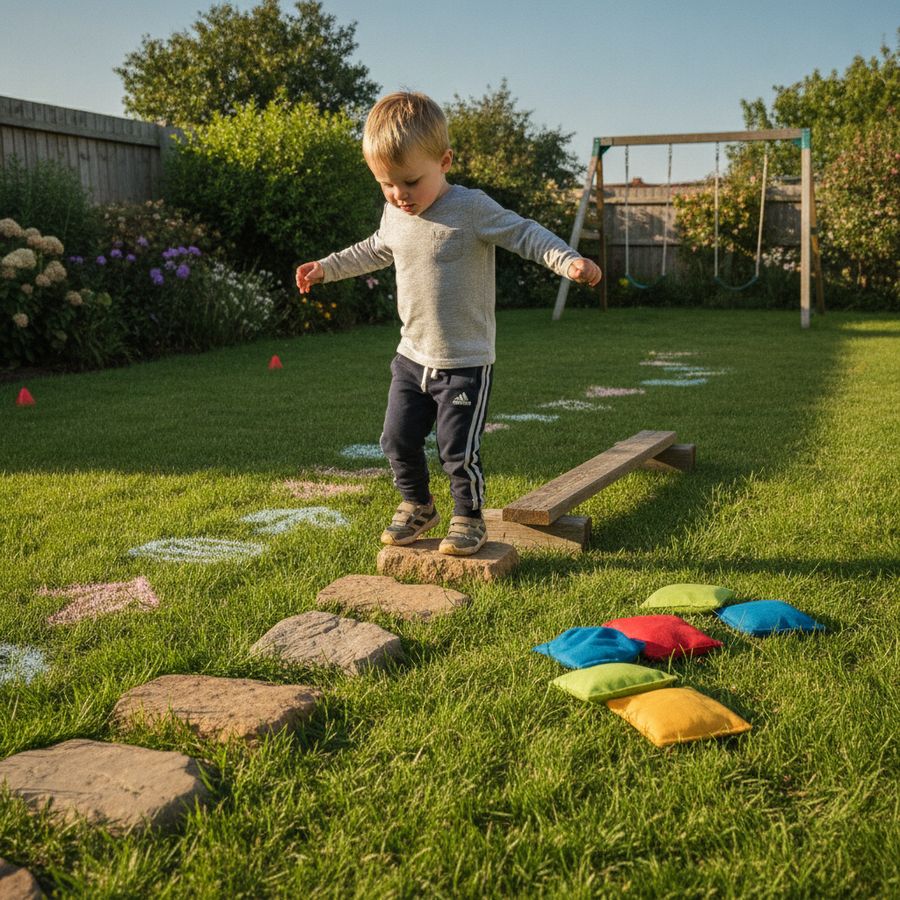
Simple setups can create powerful results. Stepping stones arranged in different patterns teach children to judge distance and control each step. Hopscotch improves rhythm and single-leg balance. A beanbag toss adds hand-eye coordination, while scooter races and obstacle courses build timing, turning, and whole-body control.
Parents can also rotate coordination activities to keep them fresh. Variety helps children use different muscle groups and prevents boredom. Great examples include:
- Follow-the-path games using chalk lines
- Mini relay races with cones
- Balance beam walks using low, safe surfaces
- Ball kicking, catching, and target throwing
- Jumping sequences over soft markers
Children build coordination fastest when they repeat fun movements often and without pressure
Many outdoor toys naturally support these skills. Balance bikes encourage core stability and steering control. Hoppers, skipping ropes, and low climbing frames improve rhythm and body awareness. Even classic garden toys for kids can become skill-building tools when used creatively. The key is to focus less on perfect performance and more on regular opportunities to move, adjust, and try again. That process is what strengthens coordination over time.
How to Make Garden Play Safer
Outdoor fun is at its best when children can explore confidently in a space that feels exciting and secure. Making garden play safer does not mean removing every challenge. It means creating an environment where children can enjoy active play with reduced risk and better supervision.
Start by matching outdoor toys to your child’s size, age, and skill level. A toy that is too advanced can turn healthy challenge into preventable danger. Check that surfaces are stable, paths are clear, and there is enough room for riding, throwing, or climbing without bumping into furniture, planters, or fences.
It also helps to build a quick safety habit before each play session. Take a moment to inspect equipment and surroundings. Look for loose parts, slippery patches, sharp edges, and worn handles or wheels. These small checks can make a big difference in everyday use.
- Use soft landing areas where possible
- Keep water play separate from fast-moving ride-on toys
- Store toys away after use to prevent weather damage
- Choose helmets and protective gear for riding activities
- Set simple rules children can remember easily
Safe outdoor play works best when the space is prepared for movement, not just filled with toys
Supervision remains important, but independence matters too. Give children room to test their abilities while staying close enough to step in when needed. With the right setup, garden toys for kids can support confidence, skill-building, and joyful daily movement in a way that feels both adventurous and safe.
Rainy-day Alternatives with Similar Benefits
Not every day is ideal for the garden, but children still need movement, challenge, and sensory variety. Rainy days are a great time to create indoor activities that offer similar benefits to outdoor toys. With a little imagination, active play can continue even when the weather changes.
Look for options that mimic the same motions children enjoy outside. If they love balance toys, create a taped line on the floor for heel-to-toe walking. If they usually ride, set up a crawling tunnel route or a pillow obstacle course. If they enjoy throwing games, soft beanbags and laundry baskets make an easy indoor target challenge.
Some indoor-friendly coordination activities include:
- Animal walks such as bear crawls and frog jumps
- Dance-and-freeze games for body control
- Soft ball rolling and catching
- Indoor scavenger hunts with movement tasks
- Magnetic or fine motor games for calmer follow-up play
For families who like educational play, quieter alternatives such as magnetic mazes and hands-on puzzles can complement movement sessions well. They do not replace the physical benefits of running outdoors, but they can continue to strengthen focus, hand-eye coordination, patience, and problem-solving.
When outdoor play is not possible, the goal is to keep children moving, thinking, and exploring in different ways
A balanced routine works best: active movement first, then calmer play. That combination helps children regulate energy while still developing coordination activities and confidence, making rainy days feel less limiting and far more fun.
Choosing Durable Toys for Everyday Use
When buying outdoor toys, durability matters just as much as entertainment value. Toys that are used often will face sun, moisture, dirt, bumps, and enthusiastic handling, so sturdy materials and thoughtful design are worth prioritizing. A durable toy usually delivers better long-term value because it stays safe, functional, and appealing through repeated play.
Start by checking the construction. Strong plastics, sealed wood, rust-resistant metal parts, and secure fastenings tend to hold up better in family gardens. Wheels should roll smoothly, grips should feel solid, and moving parts should not wobble. If a toy folds, stacks, or stores easily, that can also extend its lifespan by protecting it when not in use.
Practical features often make a big difference in everyday family life. Look for:
- Easy-clean surfaces
- Weather-friendly finishes
- Rounded edges and child-safe materials
- Adjustable settings for growing children
- Multi-use designs that stay interesting longer
The most valuable garden toys for kids are the ones children return to again and again
It is also wise to think beyond trends. A flashy toy may grab attention for a week, while classic active play items like balls, balance bikes, stepping stones, and throwing games often stay in regular rotation for months or even years. Choosing durable, versatile toys supports both development and day-to-day convenience.
For parents, the sweet spot is simple: toys that encourage movement, build skills, and stand up to real-life play. That combination helps children enjoy active, confidence-building fun whenever the garden calls.